
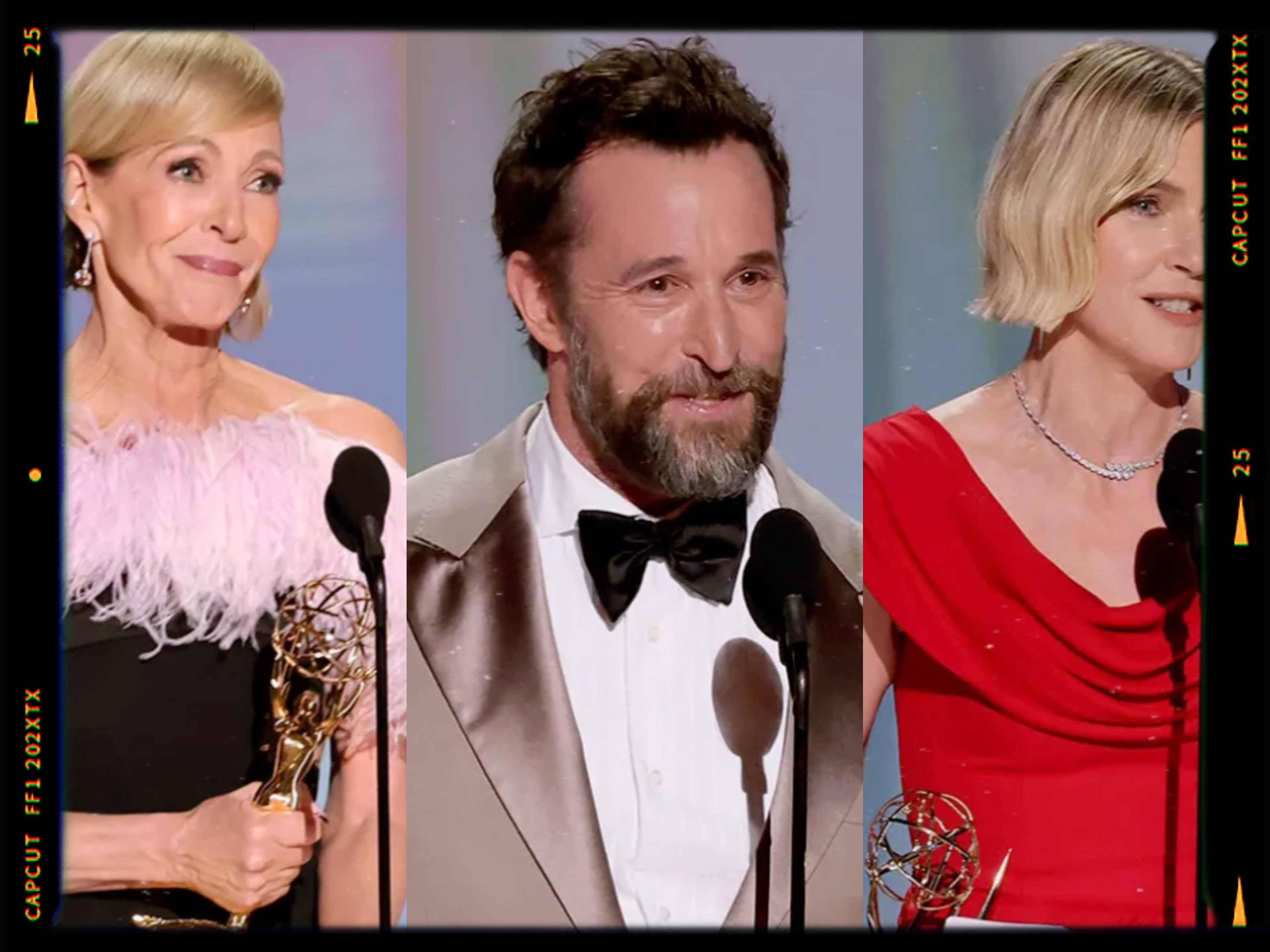
Every single winner across the 12 major lead and supporting acting categories at Monday’s Emmys was white. Not most. All of them. It’s the first time since 2021 the results have looked this stark, and within hours #EmmysSoWhite was trending again, five years to the point after a similar hashtag first went viral for the Oscars being so white.
The numbers back up what people are feeling. Only 17 performers of color were nominated this year across the lead and supporting acting races, a 39 percent drop from 28 last year, and nowhere close to the 49 nominees of color the industry hit in 2021. The only two people of color who won any on-camera or voice Emmy this entire cycle, Ernest Harden Jr. and Octavia Spencer, won the week before at the Creative Arts ceremony, not on the broadcast anyone was actually watching.

To be clear, it’s not that nothing happened. Hiro Murai made history as the first Asian director to win Best Comedy Directing, for Widow’s Bay, only the third Asian director ever to win an Emmy in any category. Oscar Isaac came close for Beef in the limited series category before losing to Matthew Rhys, who became the first performer ever to win two lead acting Emmys in a single night. Chase Infiniti picked up a nomination for The Testaments, though the win in that category went to Rhea Seehorn for Pluribus. So there’s a small sprinkle of diversity in the room and within that not much of the nominees walking out with a trophy.
Personally, I didn’t watch this year’s Emmy because I already had a rough idea how the night would go. And every time this happens, there’s a version of the same ritual: someone acknowledges the pattern out loud, it gets a laugh, the next day a bunch of headline similar to this are released on the lack of diversity and then nothing about who’s actually winning changes. That’s exactly what happened in 2021, and here we are, doing it again five years later like clockwork.

This isn’t just an Emmys problem. It’s the whole industry, in the middle of a very deliberate DEI rollback under this administration, and the numbers prove it’s not paranoia. UCLA’s most recent diversity report on theatrical films found that actors of color made up just 25.2 percent of lead roles in 2024, down from 29.2 percent the year before, even though people of color make up 44.3 percent of the U.S. population. Directors of color dropped too, from 22.9 percent to 20.2 percent. And it’s not just theatrical. UCLA’s streaming report found lead roles for actors of color fell from an all time high of 51 percent in 2024 down to 36 percent in 2025, the first time in three years that number dropped below the population’s actual share. All of this despite UCLA’s own researchers pointing out, repeatedly, that diverse casts perform better at the box office and travel better internationally. So this isn’t the industry chasing what works. It’s the industry refusing to change.

You can see the same pattern outside the Emmys too. Marvel has quietly gutted nearly every project centering a Black character in the last two years, Blade cancelled, Wonder Man cancelled, Ironheart barely marketed before it dropped, Armor Wars dead, Sam Wilson pushed to the background in the next Avengers film. People online have been saying it plainly: this is not a coincidence. We saw the same thing happen to Lovecraft Country and Kindred, shows that built real audiences and still got cut short.
Even though I was happy watching Widow’s Bay sweep, that’s a show I love and it earned every bit of it. But it’s hard not to feel the other half of that feeling too, knowing how many Black and brown creators and shows aren’t getting the same shot, some not even getting off the ground, while I’m supposed to just enjoy the parts of the industry that are working and stay quiet about the parts that clearly aren’t.

So congrats to Rhea Seehorn, to Hiro Murai, to everyone from Widow’s Bay, and to Chase Infiniti for a nomination that was well earned. Here’s hoping next year looks different. Given the direction things are headed, I’m not holding my breath.
Leave a Reply